The Legend of Zelda reminds us that our journey through time is more than just about the game
It’s difficult to express into words, accurately, the moment that the Ocarina of Time remake really hit me, but I’ll try.
I’m standing on a bridge, heading out of Kokiri Forest, having just been given a crucial task by the dying Great Deku Tree. I can imagine the world ahead of me, a child, this immense task looming that somehow only I have been entrusted with.
Woven tunic donned, wooden shield armed, Kokiri Sword in hand and slingshot on my hip I’m ready — or am I?
I’m not ready.
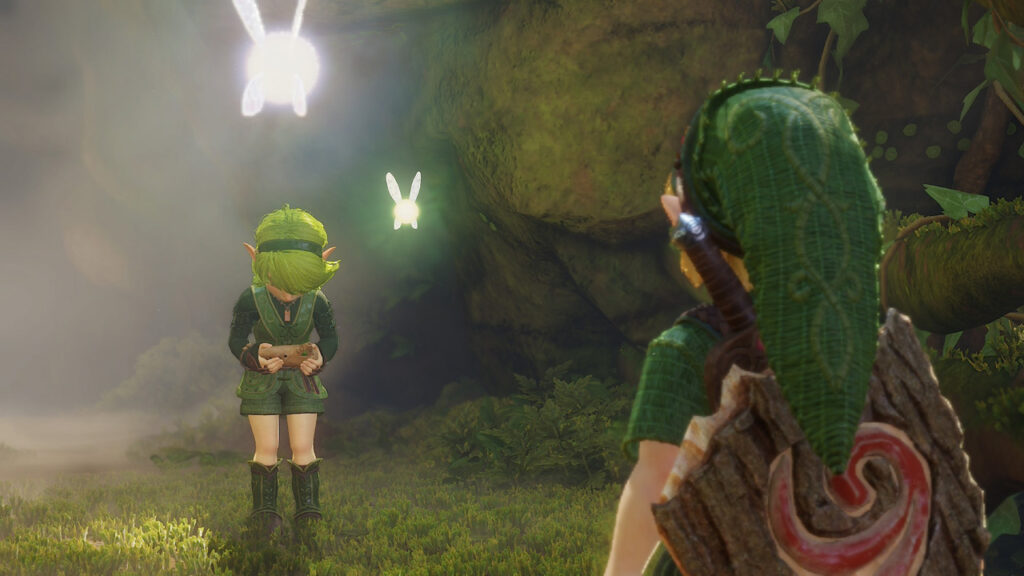
Behind me, us, Link, I’m approached by our dearest friend Saria, like us one of the eternal, forever playful children of the Forest.
You can’t possibly leave, Link. You’re not ready. You’re a child. A babe. The Forest is small but it’s secure, it’s safe, or it was until the events of the day partly of my own actions. Saria, upon the realization that we are not coming back, that we are indeed leaving the safety and confines, emits such a sadness in her body language, in her face and her words, that we’re taken aback. We can’t help but feel what she knows: We’re not leaving because we have to go on a quest or save the world. We’re leaving because we’re growing up. Because we can’t be kids forever, because our actions require us to understand their ramifications and our lives take on responsibilities beyond just joy. There’s tension in this moment. There are things said that are unsaid. This isn’t the life of a child any more.
The Legend of Zelda: Ocarina of Time has always been about growing up, but it feels like only now, in this glorious retelling of the tale, is that spark turned into a blazing light shined directly into our faces.
Perhaps that’s why I’m seeing so many different reactions to the game, from long-standing fans to first timers, to casual passersby. Each of us are feeling it, feeling SOMETHING, drawing us in and holding us, comforting us, beckoning us to go further. The visuals, based on puppets and toys, seem to indicate that we’re playing. But puppets often hide darkness, seriousness, deep and metaphysical themes that are meant to teach us and warn us and prepare us. This game doesn’t just look great, it’s looks exactly how it needs to look. Technology has finally caught up to the story that it was always trying to tell, to expand it beyond electronic game and into fable that we tell over and over. It can be almost be said that this is the first true Zelda to understand what Zelda is.
In 1998 when the original game first arrived to us I was struggling as a Junior in college as I juggled job and school and the impending Big Choices that I’d need to make once I would hopefully graduate within the next 18 months. Until then I was a college kid, enjoying art school, holding off from reality and Never Growing Up. Over Thanksgiving weekend that year, while friends were out to party and go bowling and go drinking I opted to stay home and play Ocarina of Time. I had been managing an hour here and there (art school is actually incredibly GRUELING) and now, with a couple of days off from that grind I could sink into a couch and explore Hyrule in its polygonal glory. Puzzles were incredible, action was intense, characters were memorable — this is that original NES Zelda game brought into the real world. It was my escape, with clouds of responsibility hanging over my own head, weights of adulthood slung across my shoulders and back. It was heavy, the world was heavy, but this connection to Link and his journey mirrored my own.
I was leaving my forest and heading into the giant open field.
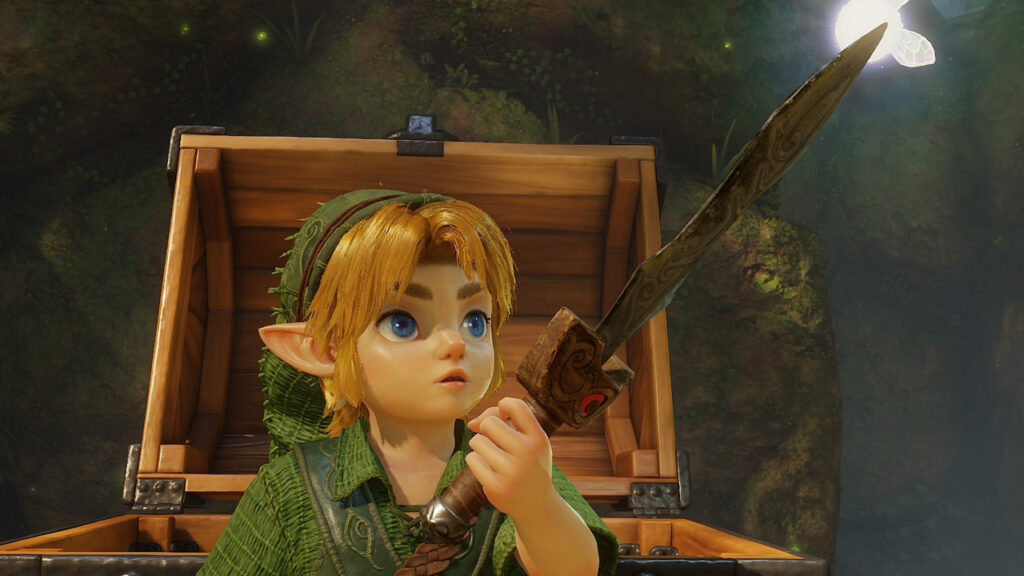
The remake’s world, while not truly as gigantic as I remember the original’s to be, is more akin to reality: it’s dense, so dense, so many plants and rocks and shifting hills and claustrophobic walls and people with big personas. There’s so much detail, so much life. I can look at the game, I can see water trickling down the side of a vine ladder into a pool below because that’s how that pool would actually be fed. Not by magic, but by physics, by the Earth and environment. The vines grow from that pool, the insects crawl around it, the enemies inside the Deku Tree only survive because it’s a part of their habitat.
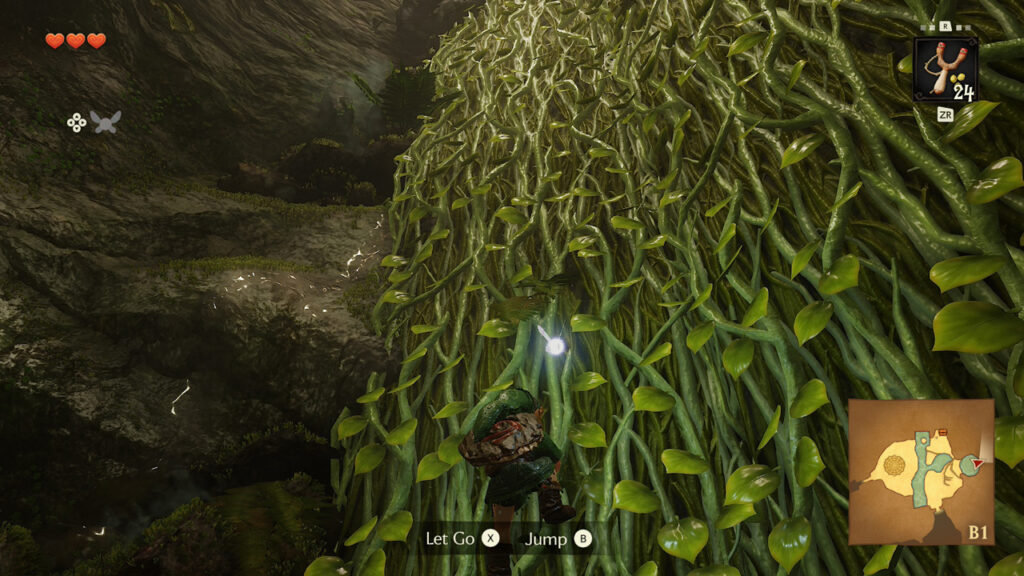
This world is connected, like our world, letting us to know that everything comes from something. That everything grows from something, whether it’s dirt or it’s the experience we gain over time.
Those connections expand to the people we meet, with genuine friendships we can feel, emotions we can insinuate, motivations that we can believe. Mido wants to protect the Kokiri, he wants the kids to stay kids forever, and yet he resents Link, this curious child who questions and who is willing to move forward, to escape that seeming perfect neverending life. Even Navi, the fairy at our side, becomes a caring guide that nudges us rather than holding our hand. Navi isn’t a trope now, Navi is a friend, one we feel integral to our journey. Everything we use in the game, from the sling shot (I never knew I loved this sling shot so much) to Link’s breathing when he uses the Ocarina, from the throw of a bomb at an enemy boss to jumping and sometimes falling off edges, our connection to the game, with the controller especially, is effortless and tight and meaningful.
The sense of detail, in the falling leaves, in the craftsmanship of the beads and feathers in Link’s cap and the woven strands of his town in his tunic, balancing tradition and home and future, is impeccable. Every shot, every angle, every way moments and actions are presented to us, is intentional. The story can only be told a certain way, and we need to experience it that way to get its full meaning.
It’s cinematic, a tease for what the upcoming movie could be.
Even later in the game when we’re faced with puzzles and locations and wells and cracked walls that for me are engrained in my being, it’s new. It’s familiar, but it’s new. We’re not just doing it for the game, we’re doing it in the world, in the story, extending it. The game throws us into adulthood, and back, and forward again, using youth to remind us of what we’re losing but telling us that there’s so much more to do now, next.
And yet, with all that life, with all that wonder and greatness, I’m still thinking about little Saria on that bridge. I’m still feeling her sadness, her recognition of what is about to happen to us, that our youth is about to disappear, that we only have the future to look towards to and it’s so uncertain. And I’m emotional, again, because I agree with her and because I’m ready to move on, maybe.
We’re growing up now, and the world is a new, frightening, wonderful place.
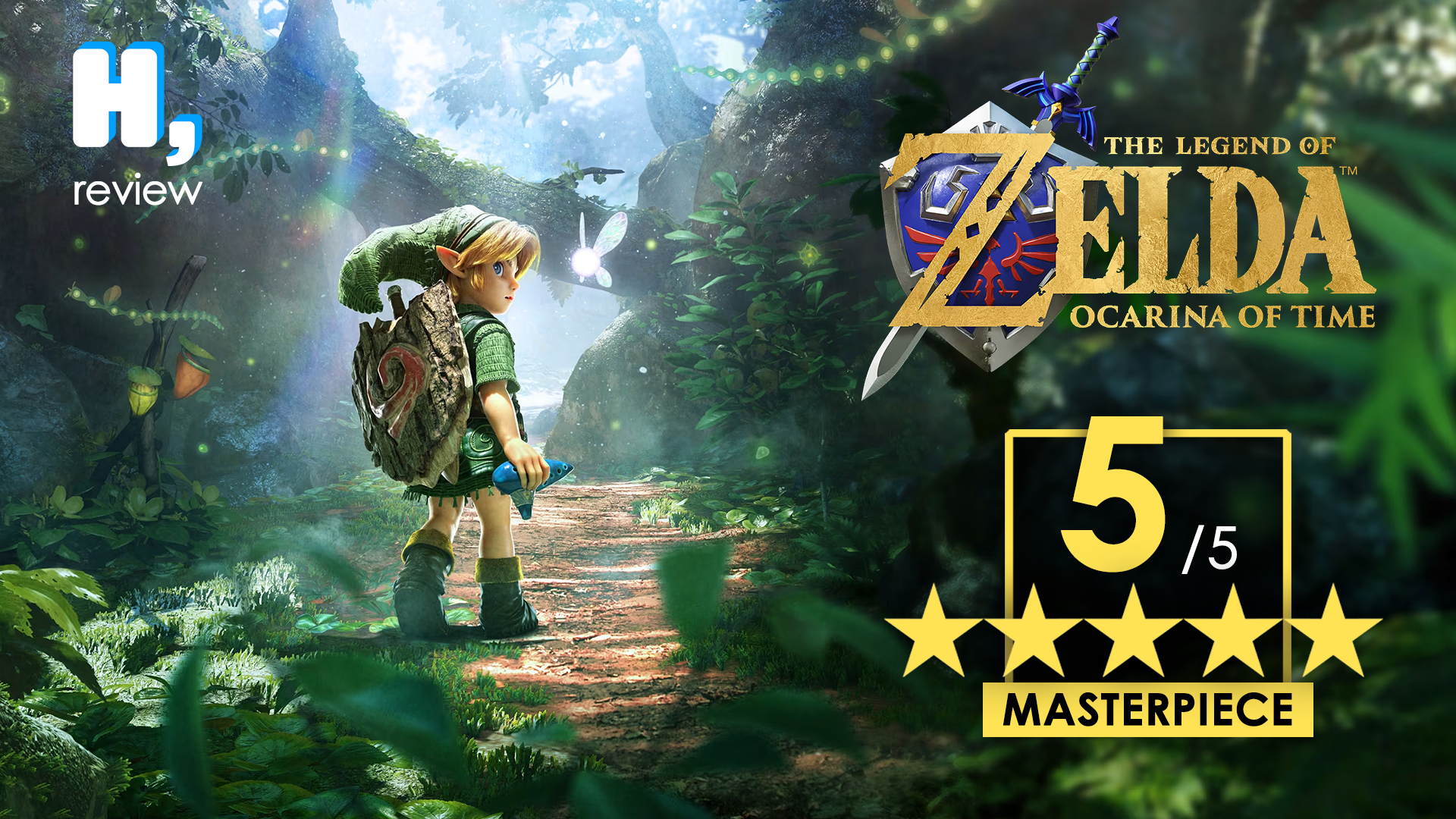
5/5 ⭐⭐⭐⭐⭐
Masterpiece
This review is based on a Nintendo Switch 2 copy of the game purchased by the Editor. Read about how we do our reviews here.
Find out more about the game at Nintendo’s website.