You Can See Everything is maybe the most important movie of the decade, actually
About 35 minutes into You Can See Everything I had to make a quick run to the restroom. On my hurried walk back — I don’t want to miss anything! — I locked eyes with a man walking out of the theater towards the restroom.
“What the fuck is going on???” he said.
“WHAT THE FUCK ARE WE WATCHING,” I replied.
That moment with a random stranger in the hallway of an AMC Theatre perfectly encapsulates the vibe of the film. Awkwardness, tension, no idea what’s going to happen, and yet wanting to see this through to the end because I have to.
I suspect that’s how Nathan Fielder feels as he records everything he experiences around Elizabeth Holmes and her husband Billy Evans at their rented, very staged seaside house. We’ve watched Fielder grow from a goofy internet comedian that created a story, to TV show documentarian that viewed a story, and now ultimately to here, in his Final Form as someone who is a reflection of Time and Society itself.
Yeah, it’s heavy! Nathan For You is now Nathan The Moment!
The film isn’t a documentary. While Evans and Holmes essentially hire the Director to create a fluff piece, and it’s presented as a true life observation, it quickly devolves into an exploration not of the couple and their family but of what we understand of Truth. Truth isn’t reality, it’s not 1’s and 0’s and a timeline, not any more. In You Can See Everything Truth is a stream of consciousness, manipulated and twisted, forced onto others in ways that we question it and our core belief systems.
Who are we to others? Who controls Truth and who accepts Truth? What is Truth, their Truth and our Truth?
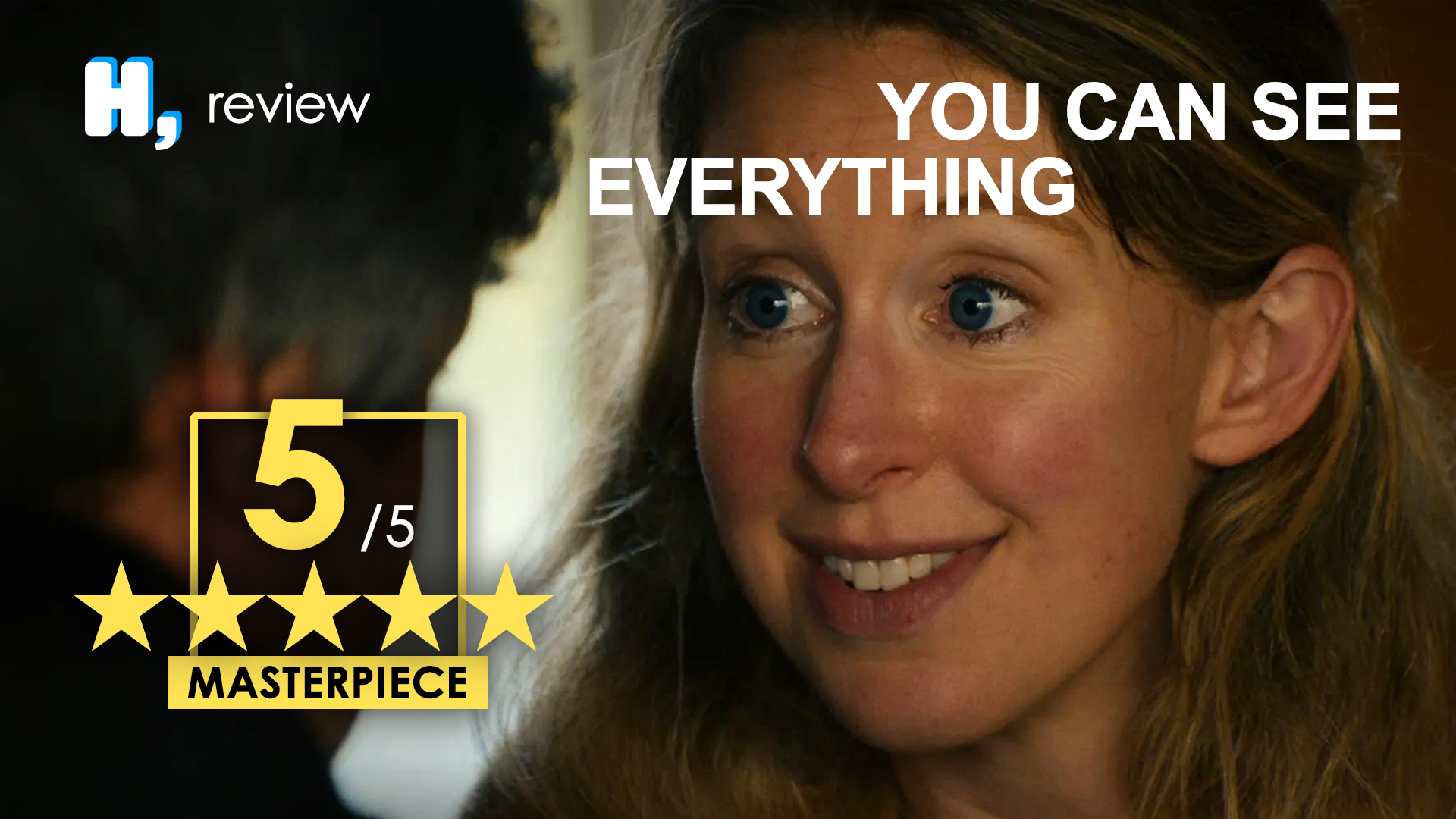
I’m constantly asking myself these questions as the film moves forward, relentless in how we see Holmes and Evans butcher each other and Fielder, how they all prop each other up, how they put the blame on the problems of society and its inability to accept pure, innovative change. Holmes is brilliant! Evans tells us over and over again, and yet he’s also telling HER that she’s brilliant. Is he fooling her? Manipulating her? Or is she manipulating him? Holmes is a master of this with big, watery blue eyes, face-to-face whispery close interactions, with a slight smile and the most subtle, subversive “you should trust me” light nod that aims to hypnotize.
The title itself, “You Can See Everything,” is loaded in double meaning, with Evans and Holmes giving full access to Fielder in hopes that viewers will become sympathetic, and with seeing everything also needing to dig deep through the layers to understand who these people are, what their cores are composed of. The movie essentially opens on Billy Evans nude in the shower, full dong exposed, as if to say “see, we’re an open book,” but in reality signaling that he’s an immense, testosterone bro that wants his public image to be presented in a very specific way, especially knowing that his wife will be in prison soon and hoping presumptively horny women will want to know that he’s an available dude for the time she’s gone.
It’s so, so weird.
When the film documents Holmes finally going into prison I check my watch to get a scope of how much time is left. TWO HOURS! Only one third of the film has gone by! How can Fielder and the film’s co-Director Lance Oppenheim possibly get two more hours???
Somehow even after that first Act the film it gets better, it gets more excruciating, it gets more piercing and in-depth. A new character is introduced that completely flips the table, usurping what it means to be an outsider viewing events unfolding and becoming someone that my whole theater cheered for whenever they were on screen.
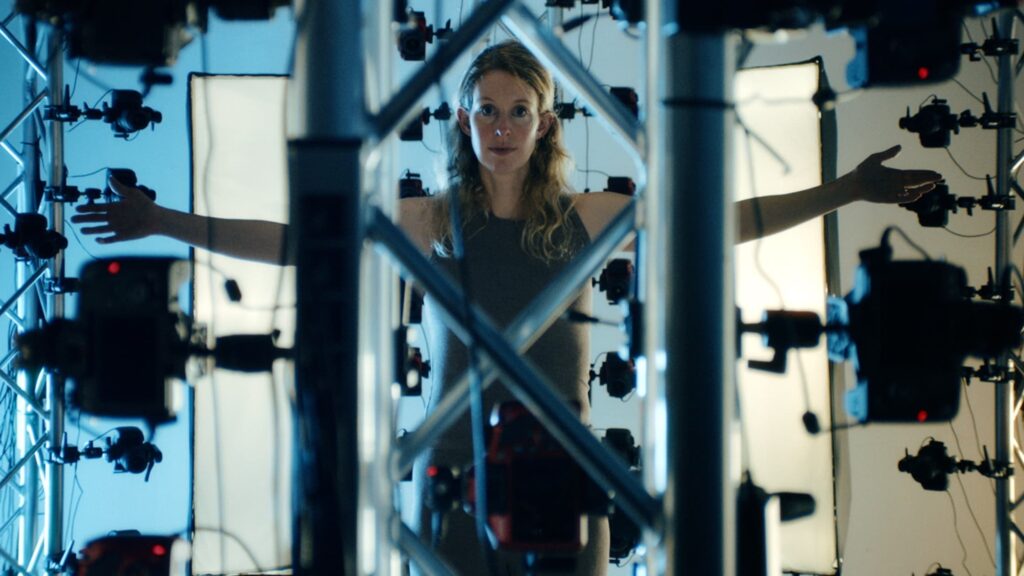
This isn’t a movie about Elizabeth Holmes. It’s not about Billy Evans or Nathan Fielder. It’s not a documentary. It’s about people, it’s about what we see, what we expect, and what we accept.
I can’t stop thinking about one specific interaction in the film, something that’s so layered with meaning and fear and humanity that it’ll haunt me for likely the rest of my life:
I know what you’re feeling right now.
No. You don’t.
5/5 ⭐⭐⭐⭐⭐
Masterpiece
Nathan Fielder and Lance Oppenheim’s You Can See Everything is distributed by A24 and is in theaters now. This review is based on a viewing purchased by the Editor. Read about how we do our reviews here.